Choosing a Water Heater: Sizing, Expansion Tanks, and the Small Things That Cause Big Problems
The tank is the easy part. Sizing it right and getting the small code items in place is what decides whether the install passes inspection the first time.
September 4, 2026 · 4 min read
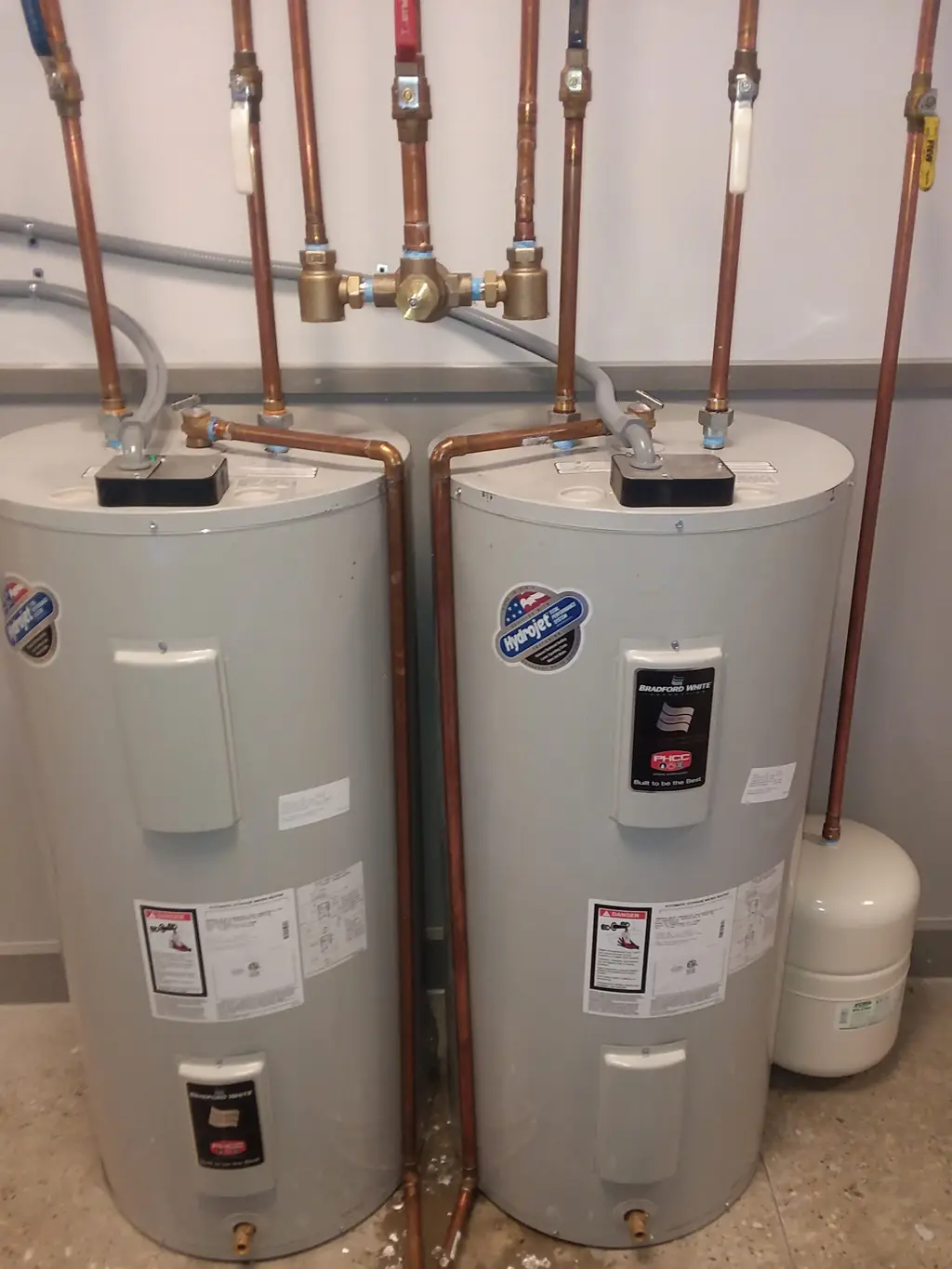
Replacing a water heater looks like a simple swap from the outside: same size tank, same spot, new unit. In practice, the tank itself is usually the easy part. The sizing, the code items around it, and a couple of small components that get skipped more often than they should are what decide whether the new water heater lasts and passes inspection the first time.
Sizing it for the house you actually have
A water heater that's too small runs out of hot water during a normal morning. One that's too large costs more to buy and more to run than you needed. Sizing comes down to how many bathrooms are actually being used at once, how many people are in the house, and whether you've got a tub that takes a long fill. A house that added a bathroom or finished out a garage apartment since the last water heater went in is a house that might genuinely need a bigger tank than what's currently installed, not just a like-for-like replacement.
We look at the actual fixture count and household size before we recommend a size, not just what was there before. If the old one was undersized, replacing it with the same capacity just repeats the same problem for another ten or fifteen years.
Expansion tanks aren't optional in most of this area
An expansion tank is a small tank, usually mounted right next to the water heater, that gives heated water somewhere to expand into instead of pushing pressure back into a closed plumbing system. Most homes here have a check valve or pressure-reducing valve on the main line that creates what's called a closed system, and in a closed system, heating water without an expansion tank means pressure spikes every time the water heater runs, which shortens the life of the tank, the fittings, and anything else in the house that's sensitive to pressure. It's a small, inexpensive component, and it's one of the first things an inspector checks.
Gas versus electric, and what's already at the house
Most replacements in this area go back in the same fuel type that was already there, gas to gas, electric to electric, because switching fuel types usually means rerunning gas lines or adding a dedicated electrical circuit, which turns a same-day replacement into a bigger job. If you're doing a full remodel or a new install where nothing's decided yet, we'll talk through both options based on what's actually available at the house.
The pan and the drain line
If your water heater sits somewhere a leak would cause real damage, an attic, a closet over finished flooring, a second floor, code requires a drain pan underneath it with a line running that pan's overflow somewhere safe, usually outside or to a floor drain. This isn't extra caution for its own sake. A water heater tank fails eventually, every tank does, and the pan is what keeps that failure from turning into a ceiling repair below it.
What actually fails inspection
- Missing or improperly sized expansion tank on a closed system
- No drain pan, or a pan with no drain line routed anywhere
- Temperature and pressure relief valve discharge pipe missing, too small, or not terminated correctly
- Gas connector or venting that doesn't match current code for that unit
- Water heater not properly strapped or secured where code requires it
Most of these are quick fixes when we're already doing the install. They turn into a second trip and a delayed inspection when they get missed the first time, which is exactly why we go through the list before we call a job done, not after an inspector sends it back.
Sediment and hard water
Water heaters take the brunt of hard water in this area, because minerals settle out of the water as it heats and build up on the bottom of the tank over time. That buildup makes the unit work harder to heat the same amount of water, and it's part of why a tank that should last well over a decade sometimes doesn't make it that far. Flushing the tank periodically helps, and if the sediment problem is bad enough, treating the water going into it is worth a conversation.
Why commercial tanks fail earlier than people expect
Commercial water heaters, the kind we install in banks and multi-unit buildings, work harder than a residential unit because the draw is more constant and the recovery demand never really stops during business hours. We've piped commercial water heater banks where the difference between a system that lasts and one that fails early usually comes down to whether it was sized for actual peak demand, not average demand, and whether the water quality in that building called for anything extra to protect the tank. Hard water is common in this part of Texas, and it shortens the life of any tank that isn't sized or protected with that in mind.
If your water heater is more than ten or twelve years old, is undersized for what the house actually uses now, or you're just tired of running out of hot water, give us a call at 281-361-7217. Free estimates, and we'll size it for the house you actually have.
Pride Plumbing, Inc. — 281-361-7217
Call 281-361-7217More articles
Slab Leaks in Porter and Kingwood: The Signs and How We Find Them Without Tearing Up Your Floor
Gumbo clay soil moves every year, and that movement is a big part of why so many homes in this area eventually deal with a slab leak.
Backflow Preventers: What They Protect and What Annual Testing Actually Involves
If your property has a backflow preventer, your water provider almost certainly requires it to be tested every year. Here's what that involves.