Backflow Preventers: What They Protect and What Annual Testing Actually Involves
If your property has a backflow preventer, your water provider almost certainly requires it to be tested every year. Here's what that involves.
September 4, 2026 · 4 min read
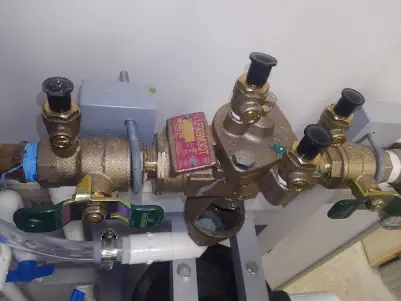
A backflow preventer is one of those pieces of plumbing nobody thinks about until an inspector asks for the paperwork. It's a mechanical valve that keeps water flowing one way, out of the clean supply line and into your building, instead of ever running backward into the public water system. Most homeowners never see one. Most commercial property owners, restaurant operators and anyone running an irrigation system sees one every year, because someone requires a test on it.
What it's actually protecting
City water only stays safe because pressure keeps pushing it forward through the pipes, into your building and out your taps. If pressure in the main drops, from a water main break, a firefighting draw, or routine maintenance nearby, water in your own pipes can get pulled backward toward the main instead. That's called backflow, and it's a real risk anywhere your plumbing connects to something that isn't drinking water: an irrigation system with fertilizer in the lines, a commercial kitchen with chemical sanitizers, a boiler system, a medical gas line, or industrial equipment with anything under pressure on the other side of that connection. The backflow preventer is the valve that stops that backward flow before it ever reaches the public supply.
Who has to test one every year
If your property has a backflow preventer, whether it's protecting an irrigation system, a fire line, a commercial building's domestic water, or a med-gas system, your local water provider almost certainly requires it to be tested once a year by a certified tester, with results reported back to them. This isn't optional paperwork. A device can pass a visual check and still fail an actual test if an internal seal has started to wear, and a failed backflow preventer that nobody caught is exactly the scenario the whole requirement exists to prevent.
We have a certified backflow prevention installer and equipment tester on staff, and we handle both new installations and the annual testing and tagging that keeps you compliant. If you're not sure whether your property needs a test, or you inherited a building and don't know when the last one was done, that's a quick phone call to sort out, not a project.
What actually happens during a test
- The tester shuts down the line and hooks up a calibrated gauge to the preventer
- Each check valve inside the assembly gets tested under pressure for proper closure
- Results get recorded on a test report, which is what your water provider is asking for
- A passing device gets tagged with the test date, so the next due date is easy to track
- A device that fails gets repaired or rebuilt on the spot where possible, then retested
The whole thing usually takes less time than people expect, and it doesn't mean shutting your building down for the day. We schedule around your operating hours when we can, especially for restaurants and commercial properties where downtime actually costs money.
Different backflow assemblies for different risks
Not every connection needs the same level of protection. A residential irrigation system with low risk usually calls for a simpler assembly, while a commercial kitchen, a med-gas line, or anything with a genuine health hazard on the other side of the connection calls for a reduced pressure zone assembly, which is built to fail safe even if a component inside it starts to wear. Picking the right assembly for the actual hazard is part of a proper installation, not just plumbing in whatever's on the shelf.
What happens if you skip it
Water providers don't always chase down a missed test right away, but most track this through a cross connection control program, and letting it lapse can catch up with you: a follow-up notice, a compliance deadline, and in some cases restricted water service until the test gets done and reported. It's a lot less trouble to get it done on schedule than to deal with it after your water provider notices it's overdue.
Med-gas backflow is its own category
If your facility has a medical gas system, the backflow protection on that line is regulated more tightly than a standard irrigation or domestic system, because the stakes if it fails are higher. We're Med-Gas certified, and we treat that testing and any related repair work with the documentation and care that category requires. This comes up more often than people expect across the hospitals, clinics and healthcare facilities we've worked in around the Houston area.
New installations
If you're putting in a new irrigation system, opening a new commercial building, or a fire marshal or plan reviewer has told you a backflow preventer is required before you can get a certificate of occupancy, we install those too, sized and configured for what's actually running through the line. Get us involved early in a commercial project and it's one less thing holding up your inspection later.
Give us a call at 281-361-7217 if you need a backflow preventer installed, tested, or you're not sure which one applies to you.
Pride Plumbing, Inc. — 281-361-7217
Call 281-361-7217More articles
Slab Leaks in Porter and Kingwood: The Signs and How We Find Them Without Tearing Up Your Floor
Gumbo clay soil moves every year, and that movement is a big part of why so many homes in this area eventually deal with a slab leak.
Getting Your Porter Home Ready Before the Next Freeze, and What to Do If a Pipe Bursts
A handful of freezing nights a year is all it takes to burst a pipe in a house built for Texas heat. Here's how to get ready, and what to do first if one breaks.