What Actually Happens Underground Before the Concrete Goes Down on a Commercial Job
By the time a commercial building opens, the underground plumbing work that made it possible is already buried and forgotten. Here's what happens down there.
September 4, 2026 · 4 min read
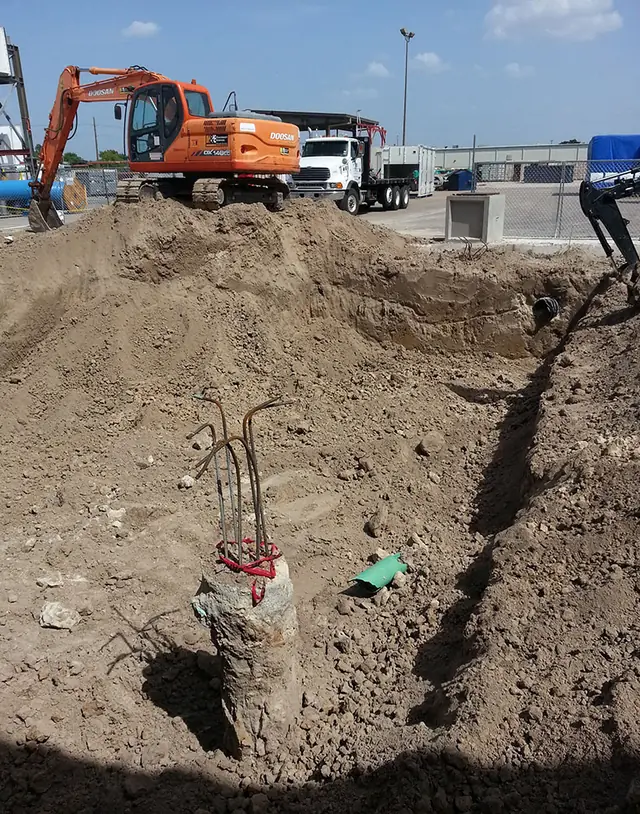
By the time a commercial building opens its doors, whatever plumbing work happened underground before the slab was poured is invisible. Nobody touring a finished retail space or medical office thinks about the water line, sanitary sewer, and fire line that all had to go in, get inspected, and get covered up months before the walls went up. That underground phase is where a huge amount of the actual plumbing work on a commercial project happens, and it's also the phase where mistakes are the most expensive to fix later, because fixing them means cutting back into a finished building instead of an open trench.
Rough-in before the pour
Every pipe that needs to run under a slab, water supply, sanitary sewer, storm drainage, has to go in, get pressure tested, and get inspected and approved before the concrete crew can pour over it. We've done this rough-in work on jobs ranging from single retail buildouts to larger commercial sites, and the sequencing matters as much as the plumbing itself. Get the trench depth wrong, miss a tie-in point, or pour before an inspector signs off, and the fix means jackhammering a slab that was never supposed to be touched again.
Fire lines are their own system
A commercial building's fire suppression system usually runs on its own dedicated underground line, sized and routed to feed sprinklers throughout the building at the pressure and volume the fire code requires. That line, and the backflow protection on it, gets inspected separately from the domestic water system, because it's protecting people and property in a way the sink in the breakroom isn't. We've installed underground fire lines on commercial projects where getting that system approved was the pacing item for the whole job's inspection schedule.
Stormwater detention is bigger than most people picture
Cities in this part of Texas generally require new commercial development to manage its own stormwater runoff instead of just sending everything straight into the street, especially with how much rain this area gets during hurricane season and the storms that roll through the rest of the year. That often means an underground detention vault, essentially a large buried structure that holds stormwater temporarily and releases it at a controlled rate instead of all at once. We've set these vaults on commercial sites, and they're a genuinely large piece of underground construction, not a minor drainage add-on.
Underground storage tank investigations
Older commercial sites, especially anywhere that used to have a gas station, an auto shop, or industrial use on the property, sometimes have underground storage tanks nobody currently using the site knows about. Before redevelopment or a change of use, that history needs to get investigated, because an abandoned tank left in the ground is a problem for whoever finds it later, usually during excavation for something else entirely. We've done this kind of investigation work as part of site development, finding out what's actually down there before a project moves forward instead of after excavation equipment hits something unexpected.
Coordinating with the rest of the job
Underground plumbing on a commercial site doesn't happen in isolation. It has to be sequenced around the excavation contractor, the concrete crew's pour schedule, and often electrical and other utility trades working in the same trench corridor. A missed coordination window can mean a plumbing crew standing around waiting on a pour date, or worse, a concrete crew ready to pour with plumbing rough-in that isn't actually approved yet. We've worked enough of these jobs to know how to fit into that schedule instead of becoming the reason it slips.
What gets checked before the pour, and why the photos matter
- Pipe material, size, and slope on sanitary sewer lines, checked against the approved plans
- Pressure test results on water supply and fire lines
- Backflow protection installed and positioned correctly
- Bedding and backfill material around every buried pipe
- Photos of every run before it gets covered, because nobody's digging it back up to check later
That last one matters more than people expect. Once concrete goes down, the only record of what's actually under there is whatever got documented before the pour. We photograph the underground work as it goes in, specifically because if a question ever comes up later, during a renovation, a tenant buildout, or just someone trying to locate a line, those photos are the only way to answer it without cutting into a finished floor to go looking.
The work we've done underground
We've handled excavating and site development, underground water lines, underground storage tank investigations, and site utility work for commercial and institutional clients across the Houston area, including public and healthcare facilities. Our focus on commercial plumbing has been a real part of this business since 1994, not something added on the side. If you're a contractor, property manager, or developer with underground utility work ahead of a pour, we can walk the site with you before excavation starts.
Call 281-361-7217 to talk through a commercial or underground scope before your project breaks ground.
Pride Plumbing, Inc. — 281-361-7217
Call 281-361-7217More articles
Slab Leaks in Porter and Kingwood: The Signs and How We Find Them Without Tearing Up Your Floor
Gumbo clay soil moves every year, and that movement is a big part of why so many homes in this area eventually deal with a slab leak.
Backflow Preventers: What They Protect and What Annual Testing Actually Involves
If your property has a backflow preventer, your water provider almost certainly requires it to be tested every year. Here's what that involves.